
Countdown to Submission Deadline
- 00 DAY
- 00 HRS
- 00 MIN
- 00 SEC
The information about the Keynote Speakers of ICCBE2026 is as follows, which will be updated regularly.
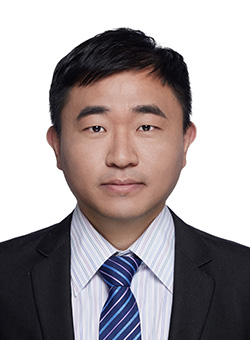
Dr. Qingzhen Yang, Professor
School of Life Science and Technology, Xi'an Jiaotong University, Xi'an, China
Biography: Dr. Qingzhen Yang is a full professor in the School of Life Science and Technology at Xi'an Jiaotong University, China. He received his B.Eng. and Ph.D. in mechanical engineering from Xi'an Jiaotong University, with visiting doctoral training at the University of Michigan-Dearborn. His research focuses on micro/nano fabrication, biofabrication, microfluidic chips and numerical modeling for biomedical applications. He has published more than 60 SCI-indexed papers, with over 3,200 citations and an H-index of about 30, and has led more than 20 research projects. His honors include the First Prize of Science and Technology Award in Shaanxi Higher Education Institutions (three times), KC Wang Young Scholar, China Overseas Chinese Contribution Award, Microsystems & Nanoengineering Young Scientist Award, and other provincial young-talent awards.
Topic: Micro/Nano-Fabrication for Organs-on-Chips
Abstract: Organs-on-chips require engineered micro/nano structures that reproduce key features of native tissue microenvironments while remaining compatible with microfluidic culture, sensing and drug testing. Conventional lithography and molding are powerful but often costly and less flexible for controllable three-dimensional hydrogel and polymer architectures. This keynote will present a micro/nano-manufacturing strategy based on manipulating liquid materials at small scales and then solidifying them, where surface forces such as electric-field forces and capillary forces dominate the shaping process. The talk will first introduce the mechanical mechanisms and multiphysics models that describe electrohydrodynamic patterning, wetting/dewetting and capillary-driven microforming. It will then discuss fabrication routes for functional micro/nano structures and devices, including periodic micropillars and microgrooves, hierarchical micro/nano surfaces, tunable hydrogel microgels, microdroplets and sensor-integrated structures. Finally, the presentation will connect these engineering methods to biomedical systems, especially microfluidic biochips and organs-on-chips for in vitro disease model construction, dynamic mechanical/cellular microenvironment control, diagnosis and drug-screening applications. The aim is to show how micro/nano-fabrication can serve as an enabling bridge between chemical/biological engineering and next-generation organ-on-chip platforms.
© Copyright 2015-2026 7th International Conference on Chemical and Biological Engineering - All rights reserved.

 X (formerly Twitter)
 LinkedIn